South African businesses lose an estimated R4 billion per year to load-shedding-related downtime. For most SMBs, the impact isn't just lost productivity — it's lost revenue, damaged equipment, and frustrated clients who can't reach you.
The good news: keeping your network online during load-shedding is a solved problem. It doesn't require a generator the size of a shipping container or a budget that matches Eskom's diesel bill. Here's what actually works.
Start with the right UPS
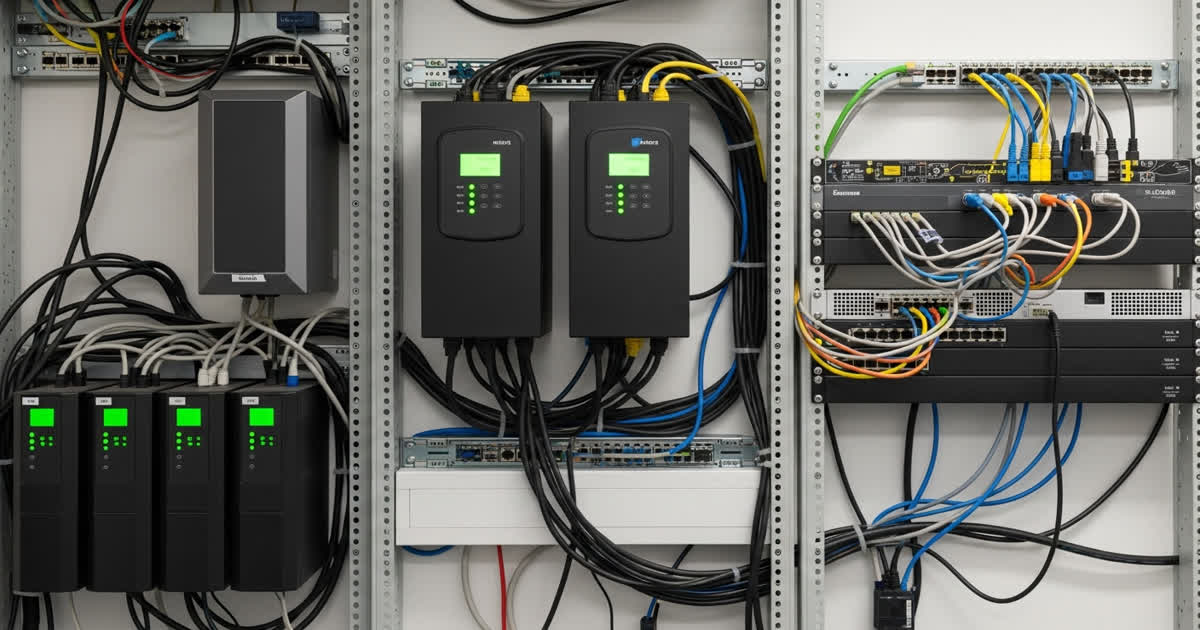
Not all UPS units are created equal. For a business network, you need an **online double-conversion UPS** — not the cheap standby unit you'd use for a home PC. Online UPSs provide clean, uninterrupted power with zero transfer time. They also condition the incoming power, protecting sensitive networking equipment from surges when the grid comes back.
**Sizing matters.** A 2000VA UPS will run a typical small-office network stack (router, switch, fibre ONT, Wi-Fi access point) for 60–90 minutes. Add a small server or NVR and you'll want 3000VA minimum.
LTE failover: your secret weapon
Most South African businesses already have fibre. What they don't have is a plan for when the fibre goes down — and during load-shedding, it often does, because the ISP's network equipment in your neighbourhood may not have backup power even if yours does.
An LTE failover router automatically switches to a mobile data connection when the primary fibre link drops. MikroTik and Fortinet both offer robust options with automatic failover and failback. At Gito, we typically configure:
Primary:: Fibre (your main connection)
Secondary:: LTE with a dedicated data SIM
Tertiary (optional):: A second LTE provider for true redundancy
The key is testing. We see too many businesses where the LTE failover was configured 18 months ago and has never been tested. SIM cards expire. Data runs out. APN settings change. Schedule a monthly failover test — it takes 5 minutes and saves hours of downtime.
Generator integration
If you're running servers or need guaranteed uptime beyond 2 hours, a generator becomes necessary. Modern inverter generators are quieter and more fuel-efficient than traditional units. Pair one with an automatic transfer switch (ATS) and your UPS only needs to bridge the 30–60 seconds it takes for the generator to start and stabilise.
The real cost of doing nothing
A medium-sized professional services firm with 20 staff losing connectivity for 4 hours per day during Stage 4 load-shedding is losing roughly R12,000 per day in billable productivity alone. Over a year, that's close to R500,000 — far more than the cost of a properly designed backup power solution.
Every business we work with eventually reaches the same conclusion: the investment pays for itself in weeks, not months.